
Tri-X 400
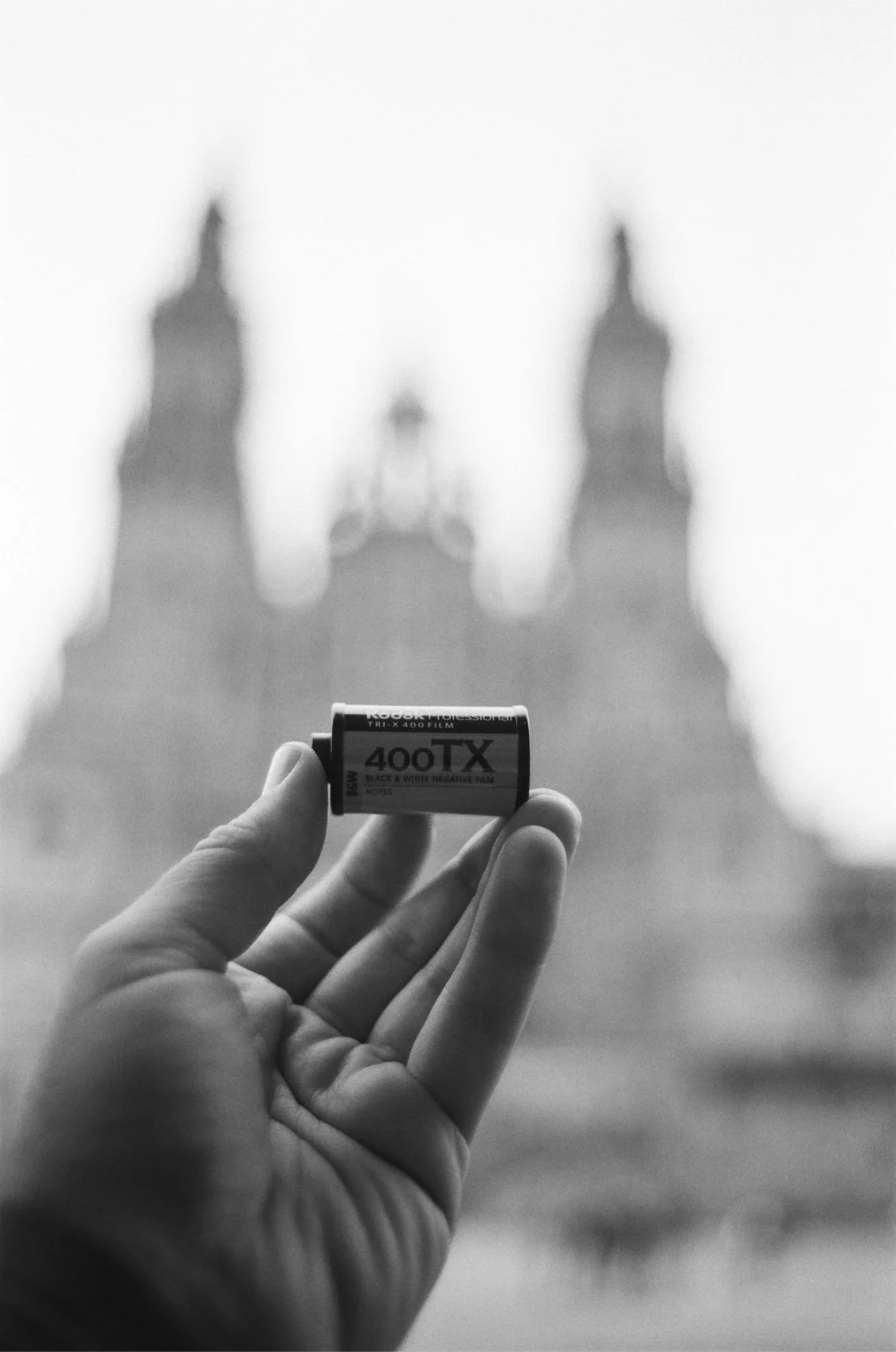
The whole issue in one frame. Santiago de Compostela, at the end of the Camino.
I've shot a lot of black and white film over the years. Tri-X has become one of my favorites, especially for traveling.
It's not the sharpest. It's not the finest grained. It's the one that has never let me down.
A short history
Tri-X came out around 1940. Back then it was rated at 200, not 400. Around 1960 it magically became a 400 speed film. Kodak didn't change the film. They changed the ruler. The ASA standard changed and the same emulsion got a faster number overnight.
In 2007 Kodak reworked it. Finer grain. Less silver. Some old timers say it's not the same film. Maybe. But everything I've shot on it looks like Tri-X to me.
This is the film that shot the 20th century. Robert Frank's The Americans. Don McCullin's Vietnam work. He pushed it to 1600 in a war zone and it held together. That's the whole character of this film. You can mistreat it and it just gets grittier.
The camera
About four years ago I found my camera. It took years of buying and selling and too much money to get there. It's a Bessaflex TM. Voigtlander name, made by Cosina, discontinued around 2005. The TM stands for twist mount. It takes M42 screw mount lenses, which are cheap and everywhere.
When I travel I take two or three lenses. A Meyer-Optik Primoplan 58mm f/1.9. A Takumar 20mm f/4.5. And something longer, either the Takumar 105mm f/2.8 or the 135mm f/2.5. Small lenses. Good lenses. Most of the photos in this issue were shot on that camera.
The trips
A couple years ago I took 50 rolls of Tri-X on the Camino de Santiago. Just the one film. I liked that. One film for the whole walk. Every frame from the same stock, so the whole trip has one look.
Out of those 50 rolls, fewer than 20 frames didn't turn out. I find that pretty amazing. It held up in just about every condition I put it through.
In 2024 I rode the train from Salt Lake City to New York. Thirty rolls in the bag. I had an eight hour layover in Chicago and walked the city with a camera. Then New York for a few days. I met a lot of good people along the way.
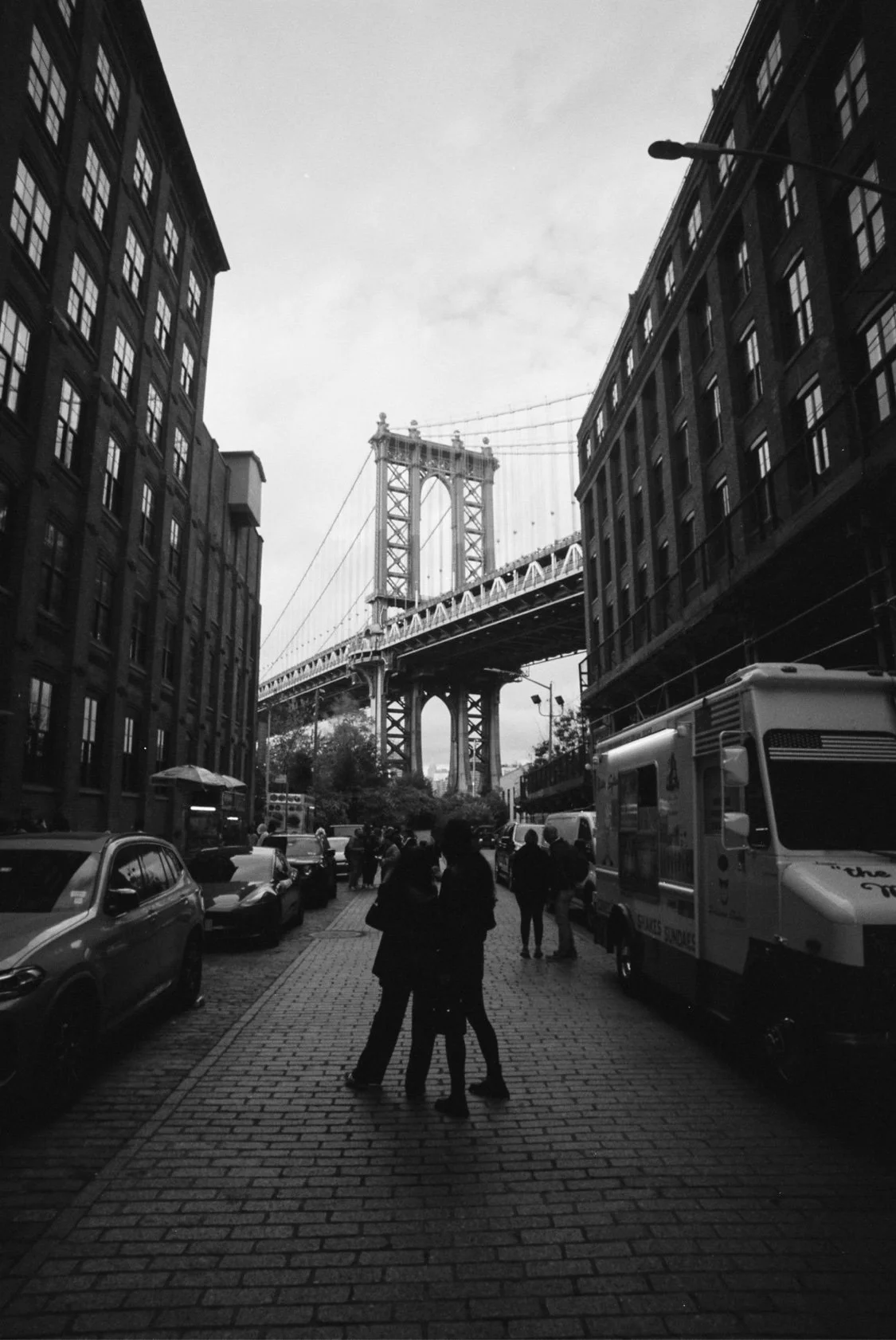
Brooklyn. Everyone photographs this spot. I did too.
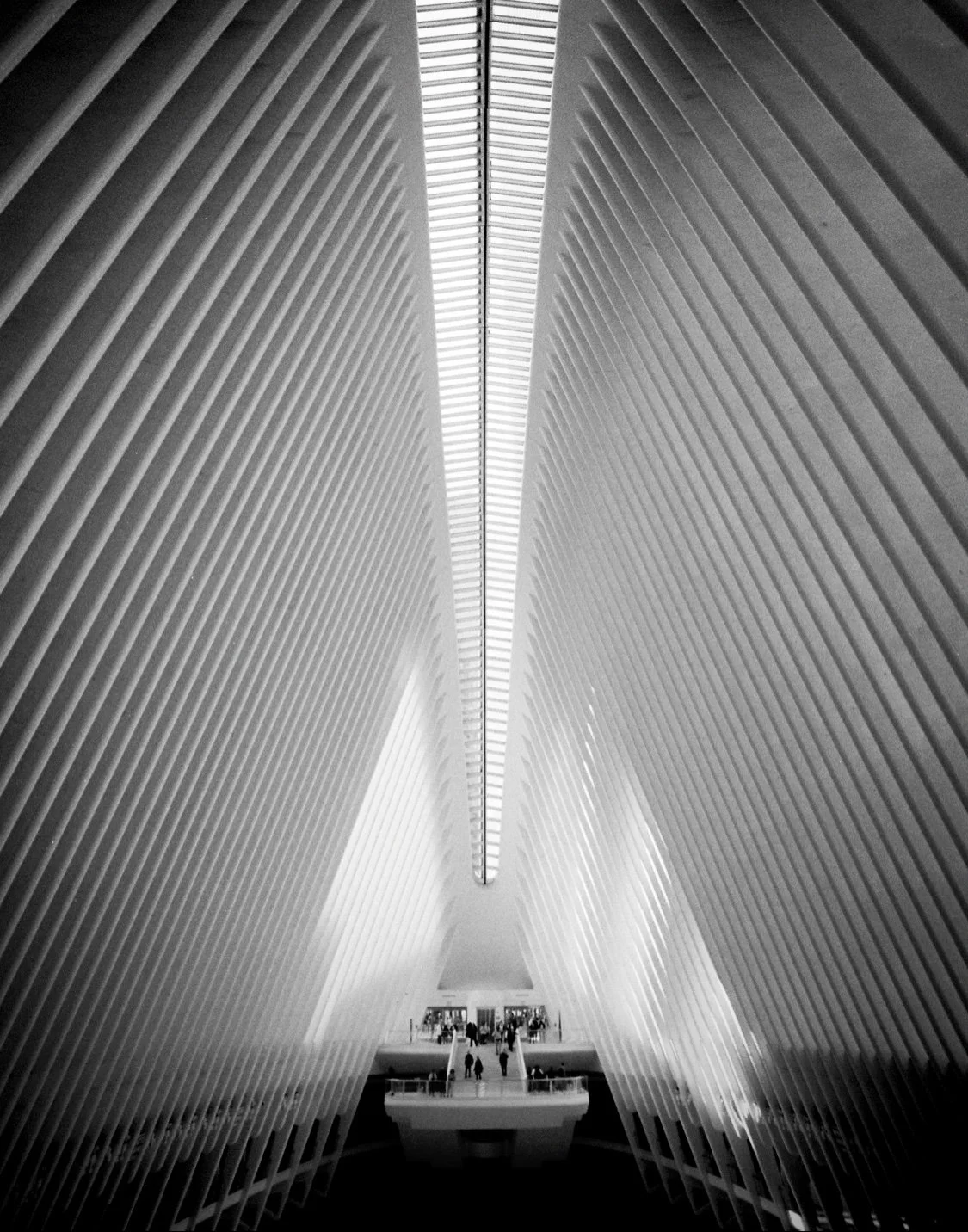
The Oculus in lower Manhattan. I stood in the middle and pointed up.
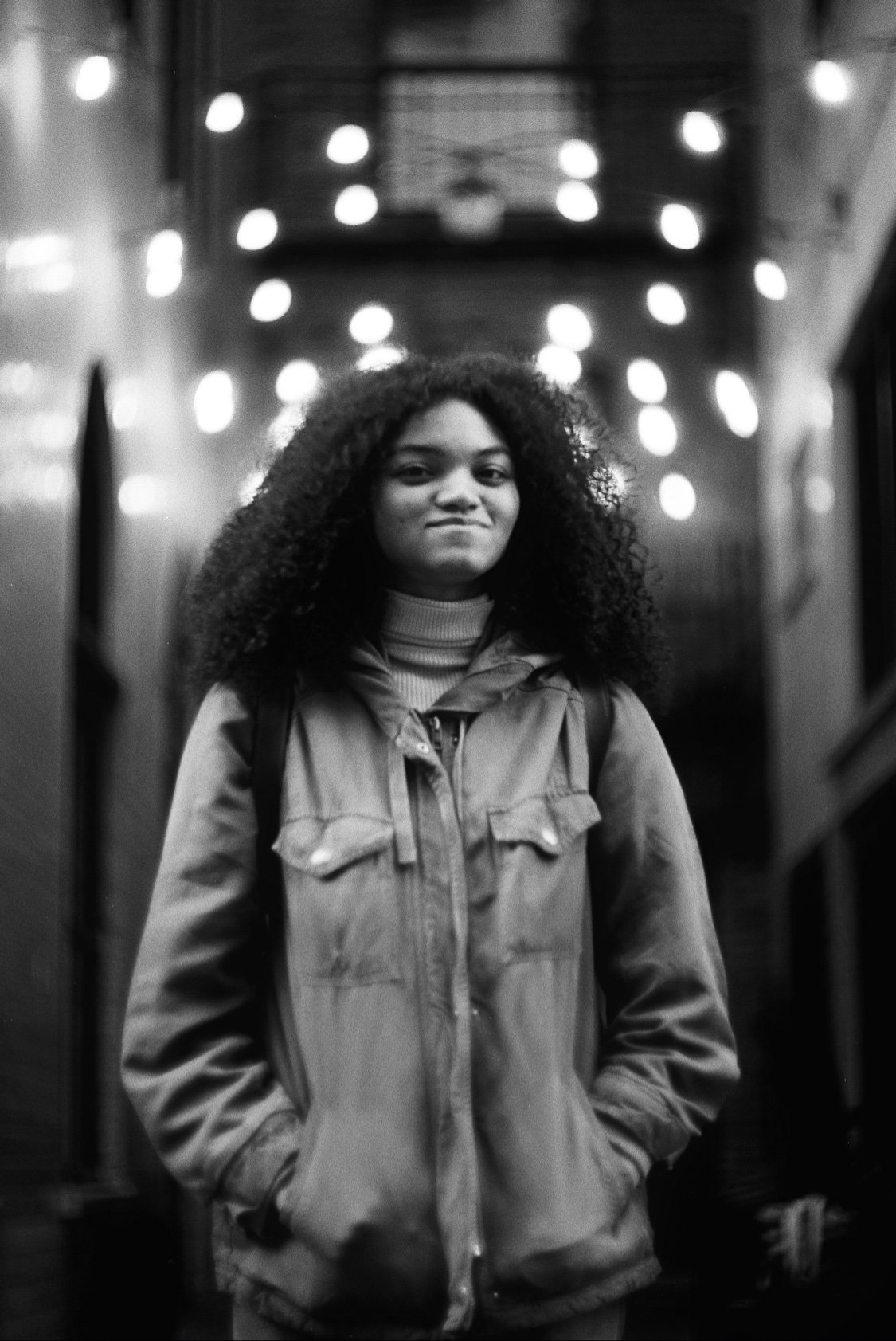
New York. I never got her name. I wish I had.
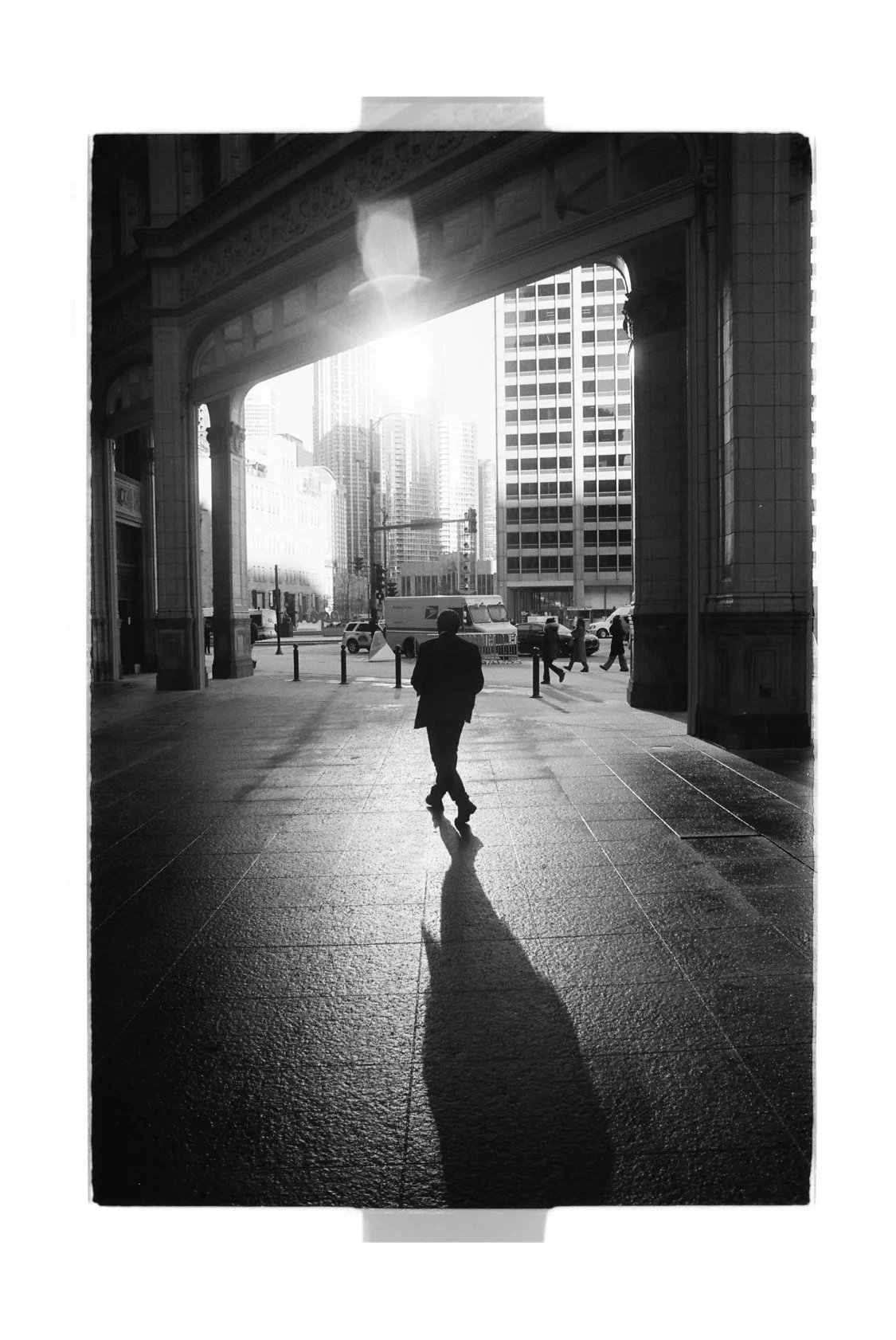
Chicago. Eight hour layover. I walked until my feet hurt.
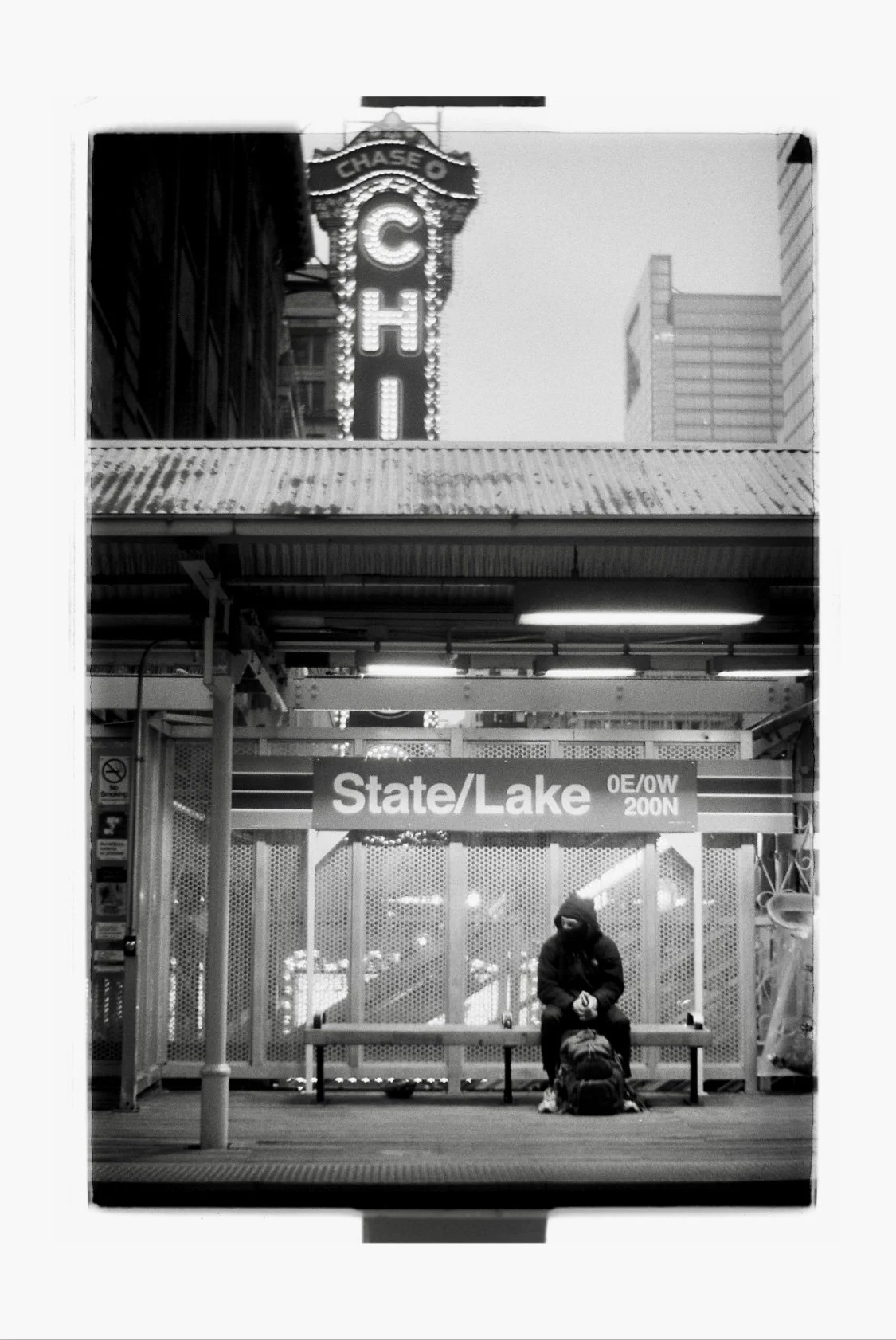
State and Lake station, Chicago. The Theatre sign, the empty bench, the cold.
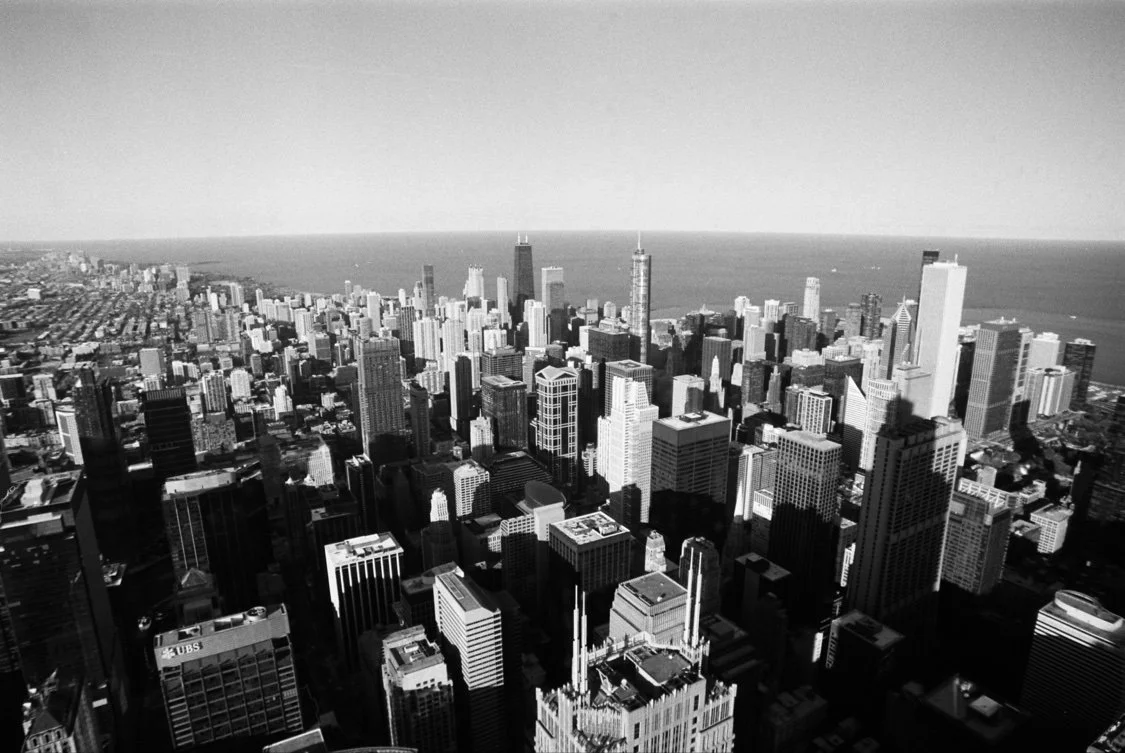
Chicago from the top of the Willis Tower. Lake Michigan going on forever.
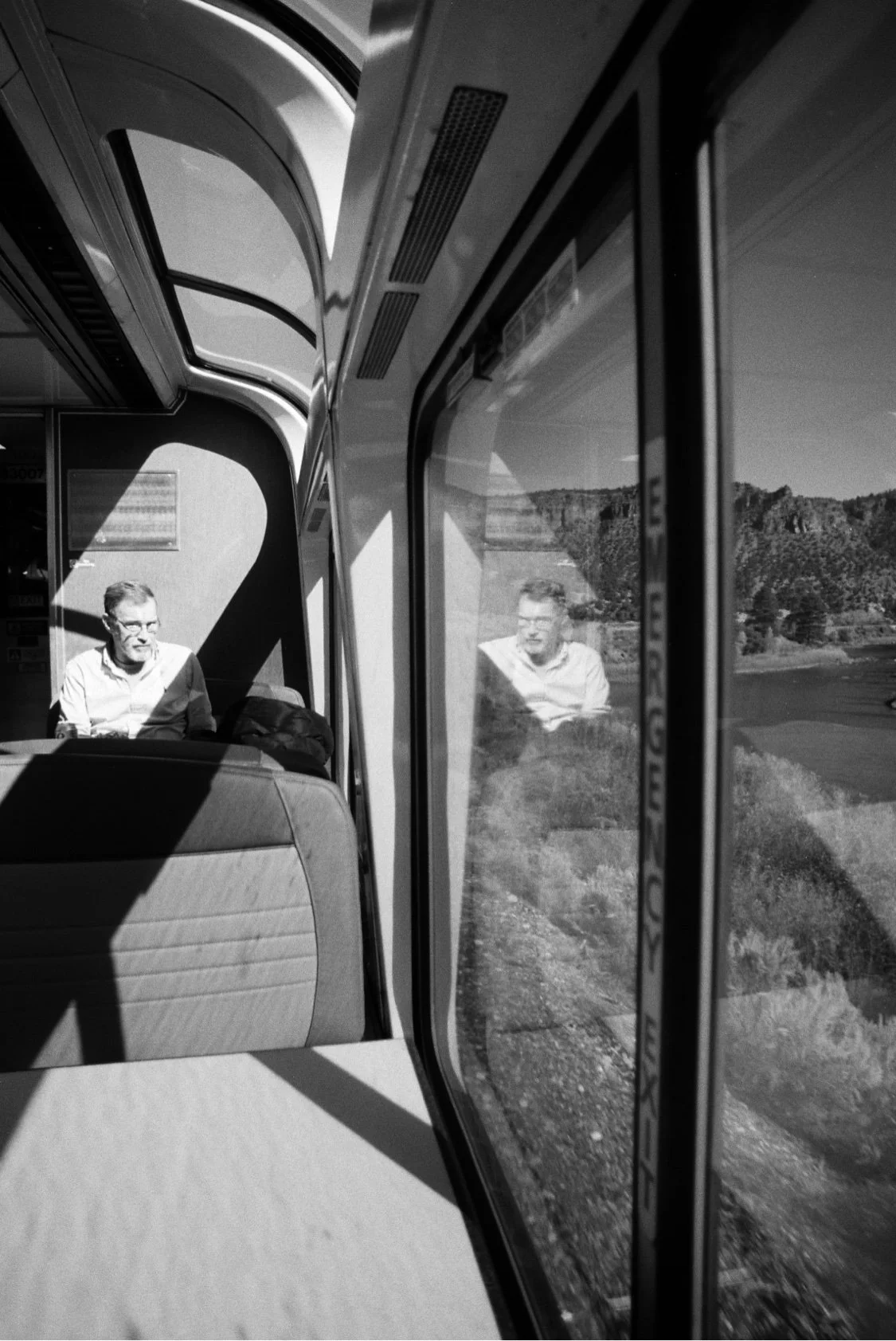
Somewhere between Salt Lake and Chicago. The observation car.
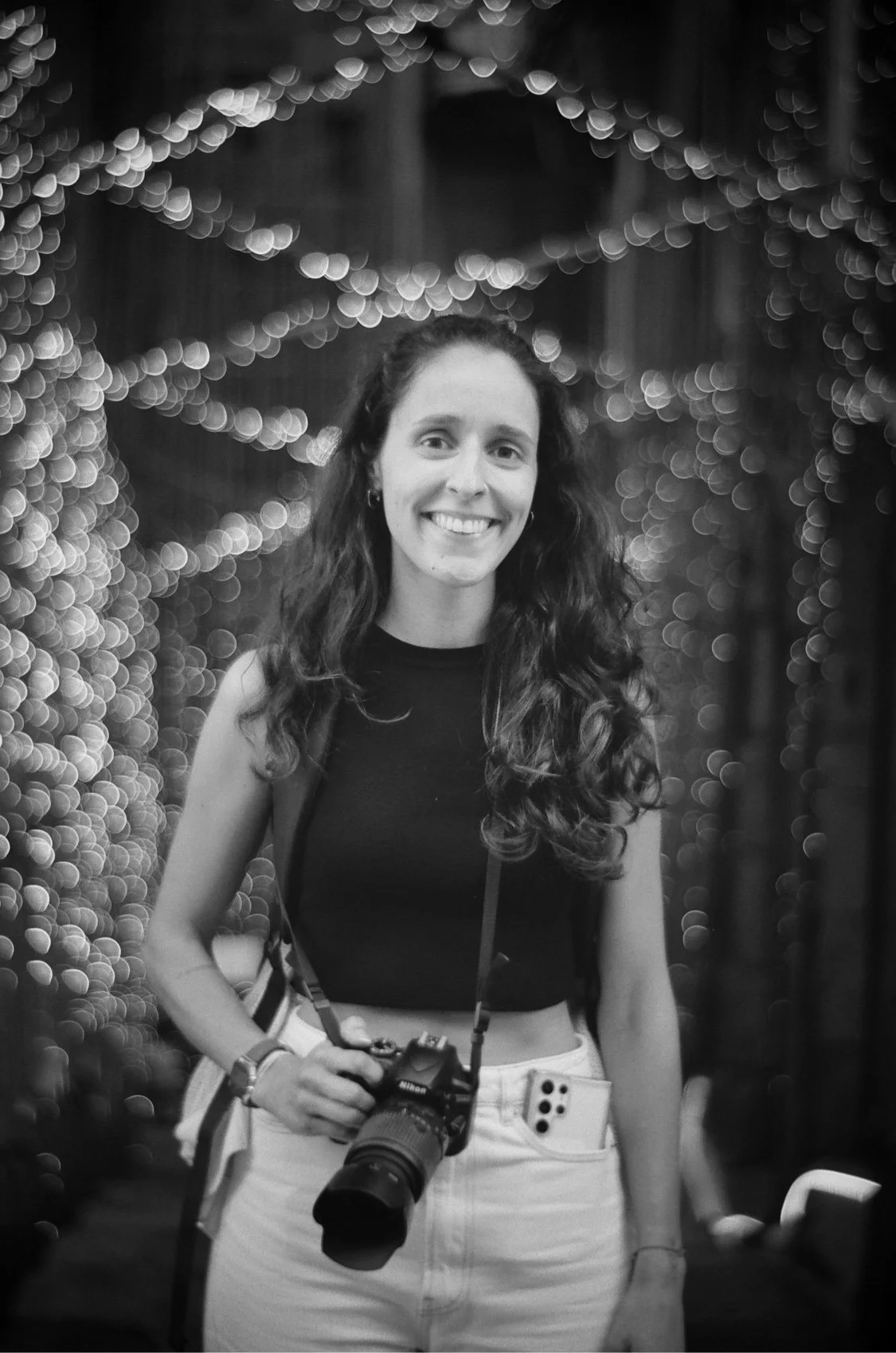
Porto, before the Camino. She was with a photography class. They let me take her portrait.
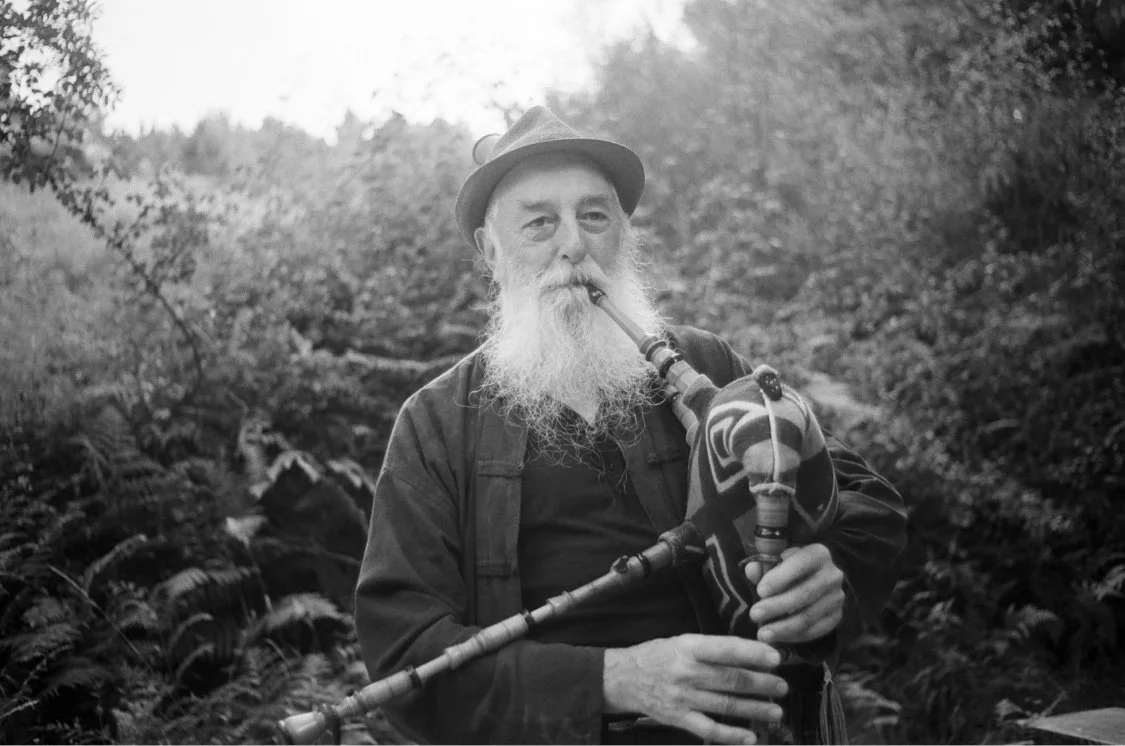
I met him on the Camino. He played for anyone who stopped.
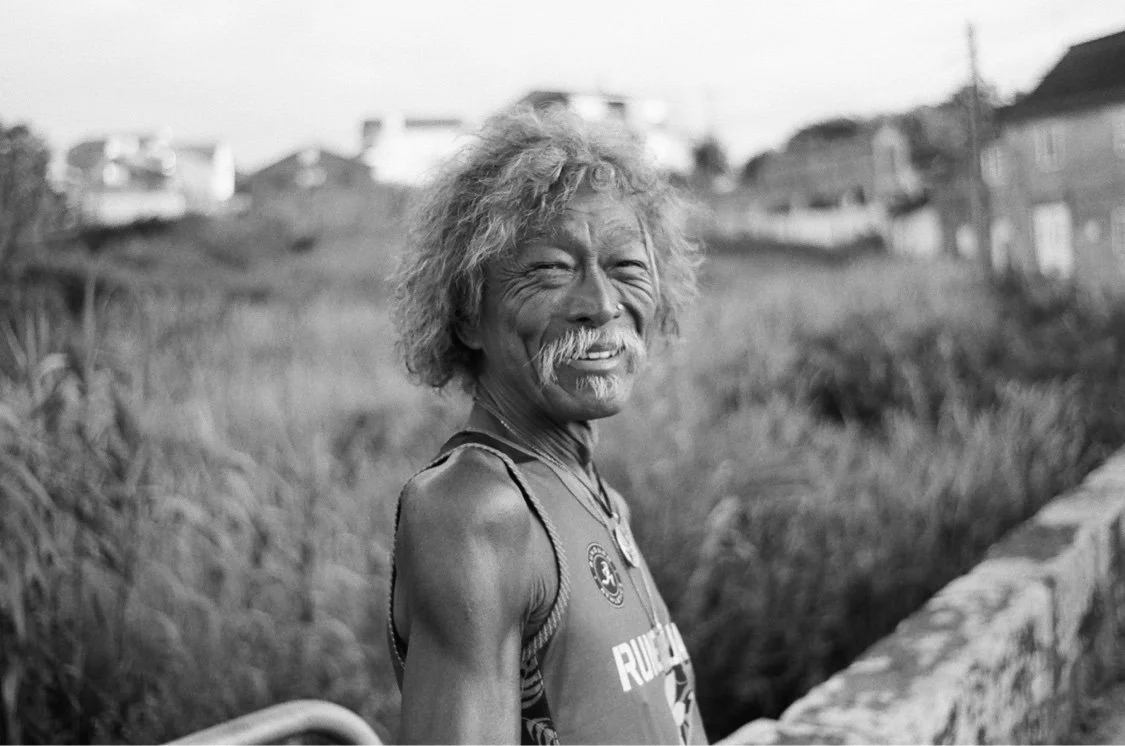
One of my favorite people on the Camino. I kept running into him for days.
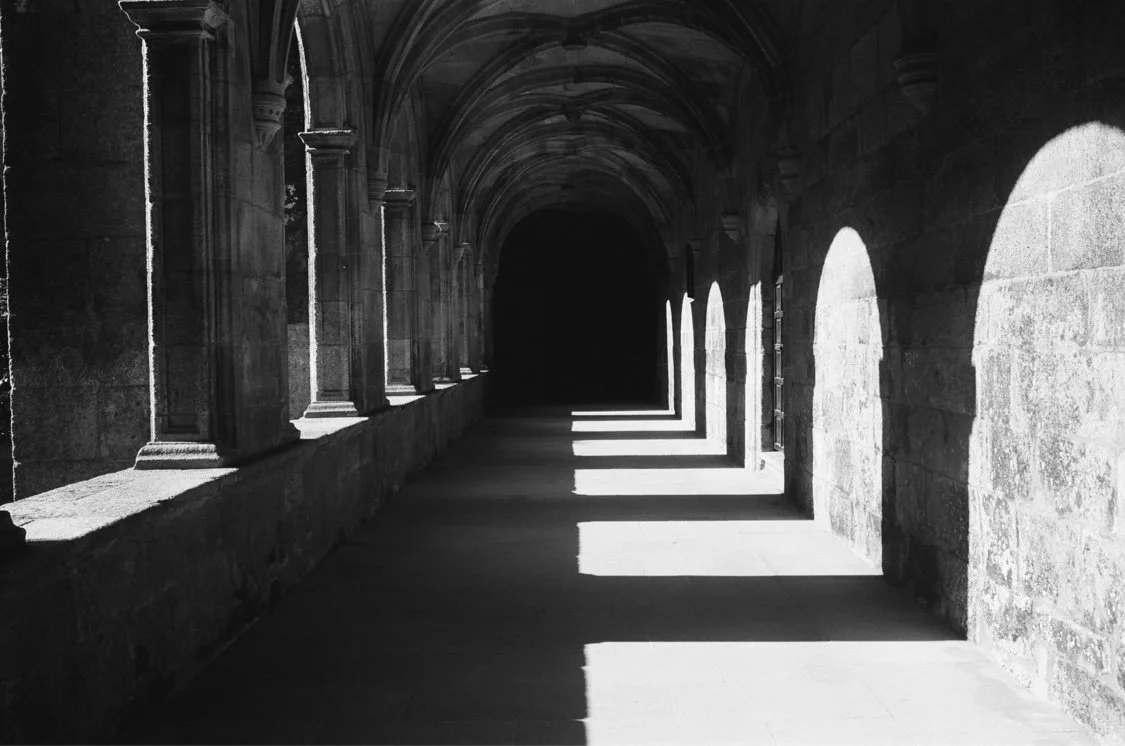
A monastery on the Camino. The light did all the work.
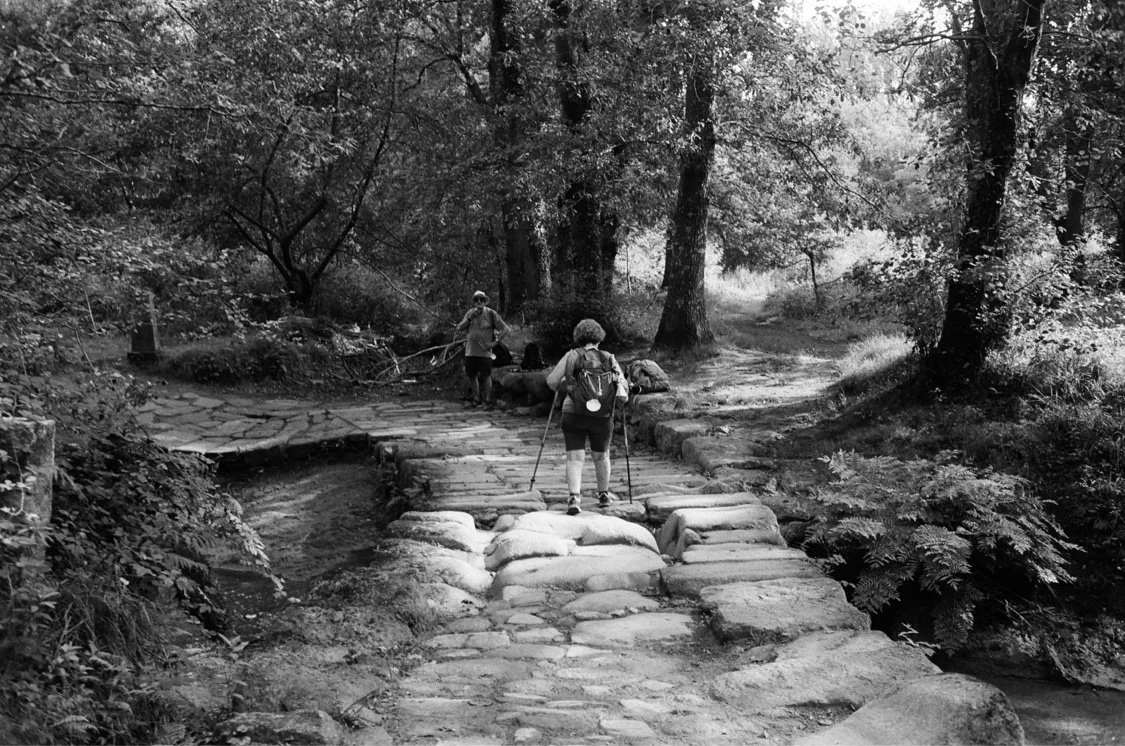
The trail in Galicia. Stone bridges and eucalyptus.
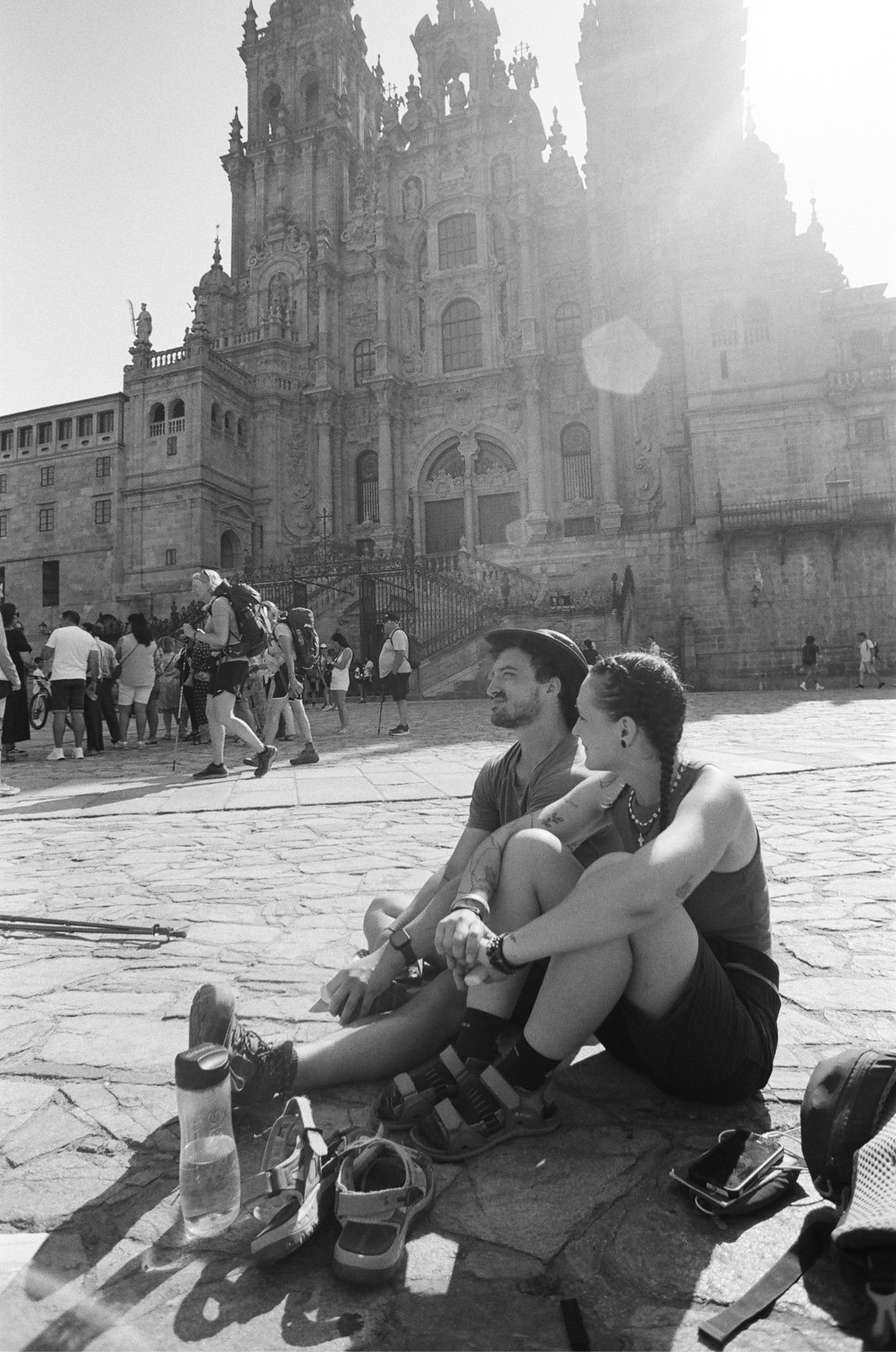
The plaza in front of the cathedral in Santiago. The end of the walk. Everyone sits down and doesn't want to get up.
What it does well
What Tri-X does well is simple. It handles bad light. It handles wrong exposure. The grain has structure to it. It isn't mush. Blacks go properly black.
Where it fails
It's not a fine grain film. If you want smooth, shoot T-Max. It's also not cheap. HP5+ costs less and dries flat. Tri-X curls when it dries. Anyone who scans their own film knows the curl.
Shooting it
Shoot it at box speed. It doesn't need to be pushed. That's a myth worth killing. It's great at 400.
If you do push it, 800 is easy. 1600 takes more care but it handles it. The film was made for this.
Developers: D-76 1:1 is the classic. About nine and three quarter minutes at 20C. HC-110 dilution B is punchier, around five minutes. Those are starting points. Check the datasheet.
Give the shadows a little extra. Tri-X likes light. A third to two thirds of a stop over box speed and the shadows open up nicely.
The meter in the Bessaflex is simple. A plus, a minus, and a circle in the viewfinder. I center the needle. When I want a little more in the shadows I go one click into the plus. That's the whole technique.
I don't develop at home yet. I'm building out a darkroom. Until then my film goes to Essential Photo Supply in Salt Lake City.
The verdict
Here's my verdict. Tri-X is one of my favorite black and white films, and it's the one I reach for when I travel. New city, bad light, no idea what the day holds. It handles it.
It's been in production since 1954. Longer than almost anything else in photography. There's a reason.